

We believe that when families thrive, individuals thrive too. With training rooted in systemic family approaches, working with clients in the context of their family, relationships and community is our bread and butter.
Systemic family theory examines how families function together, how they be, what they do, what they say and how they say it. We look for patterns of engagement, interaction, and behavior. How do families respond to anger, success, pain, joy, and how do they cope with racism, grief or the everyday hardships of human nature? We aim to understand how each family member perpetuates the experiences we see. We explore what small changes are needed to move towards healthier boundaries and more joyful interactions.
Building Healthier Relationships, Stronger Communication + Deeper Connection
Our approach to family therapy in Seattle helps families understand the patterns shaping their relationships, work through difficult experiences, and develop healthier ways of connecting with one another.
LEARN MORE ABOUT HOW
OUR TEAM CAN SUPPORT YOUR FAMILY.
Every family is different, and the support you need may extend beyond family therapy alone. Together with our team, we can support your family through communication challenges, parent-child relationships, family conflict, and major transitions, while connecting you with additional care such as couples therapy, child and teen therapy, young adult therapy, and LGBTQ+ affirming therapy when helpful.
Strengthening Family Connection
Build trust, deepen relationships, and create more meaningful connection between family members.
Improving Family Communication
Develop healthier communication skills, express needs more clearly, navigate conflict, and learn how to listen and respond differently.
Understanding Multigenerational Patterns + Trauma
Explore how family history, cultural experiences, generational patterns, and multigenerational trauma may influence present-day relationships and family dynamics.
Building Family Resilience
Develop practical tools for navigating stress, transitions, conflict, and unexpected challenges while strengthening the family’s ability to move through difficult seasons together.
Healing Together, Growing Together
Family therapy isn’t about identifying one person as the problem. It’s an opportunity to better understand one another, repair relationships, create new patterns, and move forward with greater connection.
Thriving Families
We understand the complexities of family dynamics. We also know how difficult is can be to change the negative interaction patterns that develop over time. How do we ensure all family members are seen and heard? Understanding how each family member is coping with all life’s ups and downs is becomes critical for the entire family. We help families attune to these needs and reimagine what it looks like to thrive together.
Meet Our Team
Challenges for Families
Conflict: arguing, fighting, discord
Feeling misunderstood, disconnected or frequently upset
Transition: blending families, relocation, divorce, unemployment, global pandemic, birth/death, new school/work, gender identity, etc.
Trauma: multigenerational, racism, microaggressions, workplace trauma, family assault, car accidents, arrest/police interactions, etc.
Behavioral: withdrawal, aggression, acting out, etc.
Learn About Our Clients
Integrated Support for the Whole Family
Family systems thinking is part of the clinical DNA of Dream Life Out Loud. With DLOL’s clinical leadership deeply trained in family systems, our therapists are supported in looking beyond the individual to understand the relationships, patterns, identities, and experiences that shape the whole family. This integrated approach allows our team to collaborate across individual therapy, couples therapy, youth therapy, and family therapy, bringing different clinical perspectives together to support healthier relationships and more meaningful change throughout the family system.
Click here to learn more about our team of Good Humans offering integrated therapy services for families in-person in Seattle and virtual therapy across Washington State.
Currently Welcoming New Clients


MADISON DAVIS, LMHCA
Children 6+ • Teens • Young Adults • Families
Anxiety • Big Emotions • School + Family Stress
Madison takes a youth- and caregiver-centered approach to family therapy, helping families understand the needs beneath emotions and behaviors, strengthen parent-child communication, and create more supportive patterns of connection at home.
NOAH WILLS, LMHCA
Young Adults • Adults
Anxiety • Life Transitions • Relationships • Personal Growth
Noah brings a whole-person, relational approach to family therapy, helping families explore how anxiety, men’s emotional wellness, relationships, identity, life transitions, and individual differences shape the family system—while building greater understanding, communication, and connection across generations.
Our Family Systems Approach
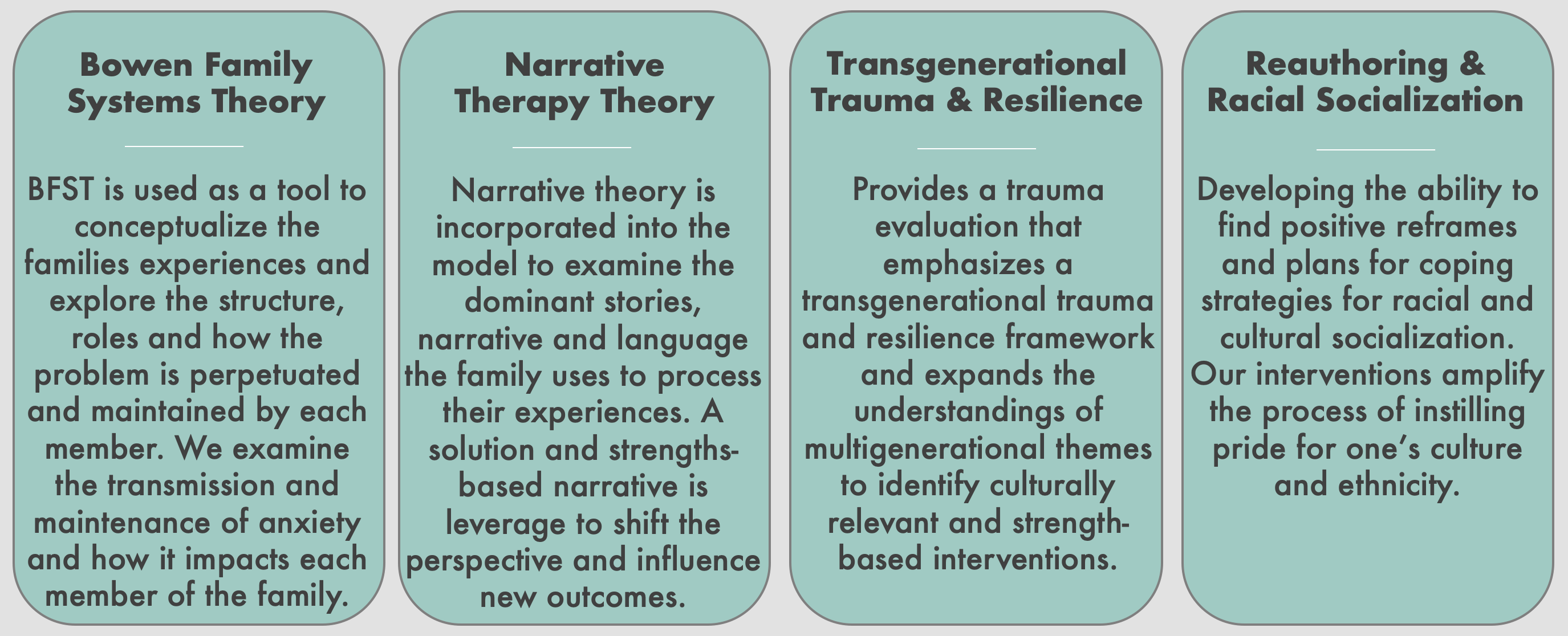
Other systemic therapy approached are integrated throughout the treatment process – Solution Focused Brief Therapy, Emotionally-Focused Therapy, Structural Family Therapy and more. To learn more reach out to our team.
Is your family ready? Contact our team
Family Therapy FAQs
Can family therapy help even if only some family members are willing to attend?
Yes. Change in one part of the family system can positively influence the whole. We’ll work with whoever is ready to participate.
Who should attend family therapy sessions?
That depends on your goals and the challenges you’re facing. Some sessions may include the whole family, while others may involve specific caregivers or siblings as needed.
Is family therapy only for families in conflict?
No. Families also seek therapy to navigate life changes, strengthen relationships, improve communication, and support children or teens through transitions.
What if I'm blamed for what’s happening?
We view challenges as part of family patterns and systems, not as problems that belong to one person. The goal is to support the entire family.
What if family members have very different perspectives?
That’s expected — and welcomed. Therapy creates space for multiple voices and helps families build understanding, empathy, and new ways of responding to one another.
How long does family therapy usually last?
The length of therapy varies based on your goals and circumstances. Some families benefit from short-term support, while others engage in longer-term care. We regularly check in about progress and next steps together.